Cart 0

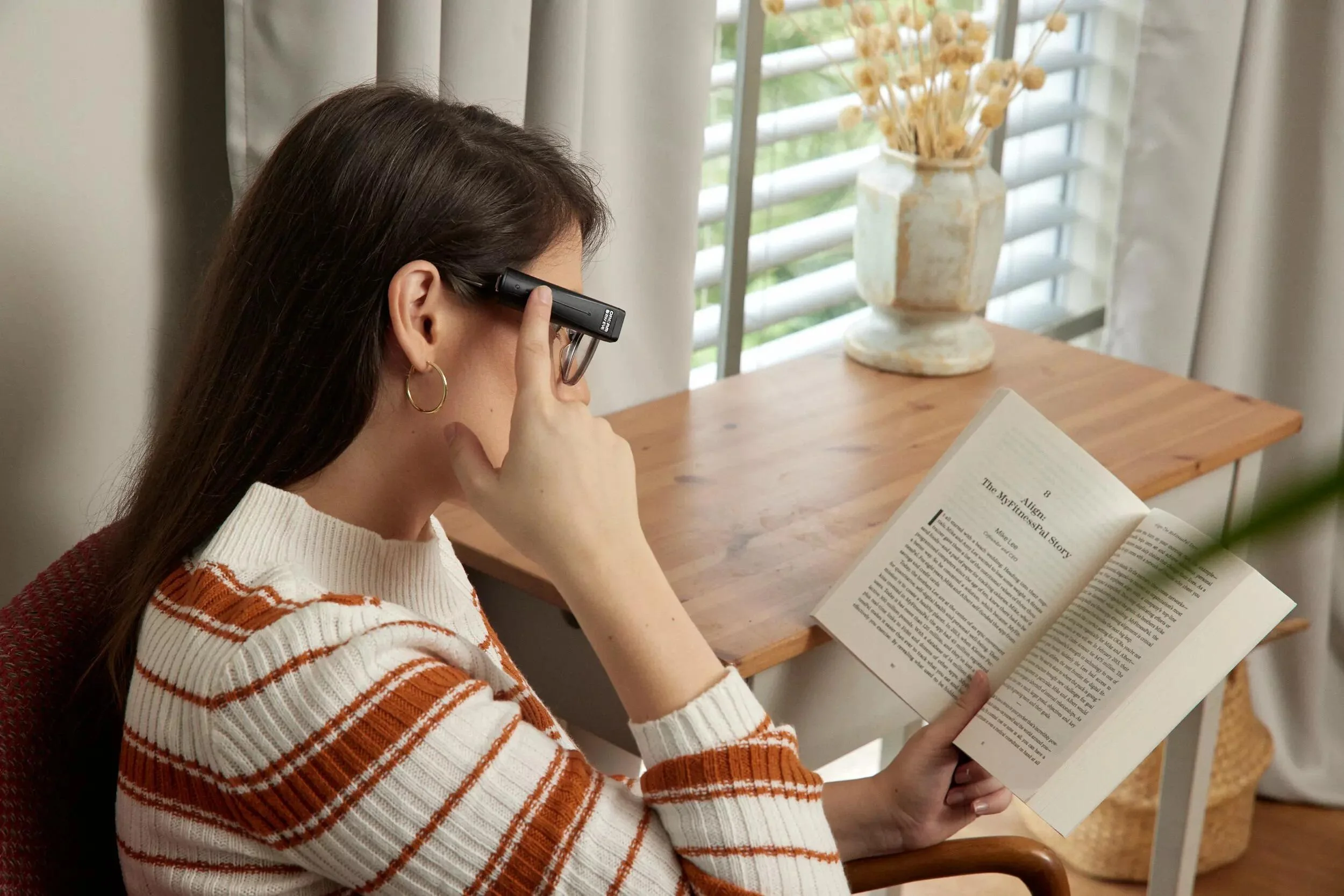
OrCam MyEye 3 Pro - when technology gives independence back to people with low vision
Favorite from the channel from 2020 to today

For many years we didn't know what Zara's diagnosis was. Not because we weren't looking, but because no one knew what we were looking for.
It all started when Zara was just 9-10 months old. I noticed a very subtle fluttering of her eyes - nystagmus. Nystagmus is often a symptom of serious neurological conditions, so our first task was to rule out serious diagnoses.
After examinations and tests it became clear that the cause was not neurological. This drew our attention to eye diseases.
Zara met her first birthday with dilated pupils. The ophthalmologist then concluded that everything was fine. But time passed, and I could see that something was wrong.
At 2 and a half years old, she started to get very irritated by the sun and kept squinting. This is how we got to Assoc. Veleva, who has been tracking her condition to this day. At this age Zara put on her first glasses - plain clear glasses.
Gradually, however, Zara began to find it harder and harder to recognise colours, and her eyesight deteriorated. Without a specific diagnosis, all we heard was "a form of macular degeneration," a diagnosis that, instead of comforting, brought fear in my mind of potential progressive vision loss.
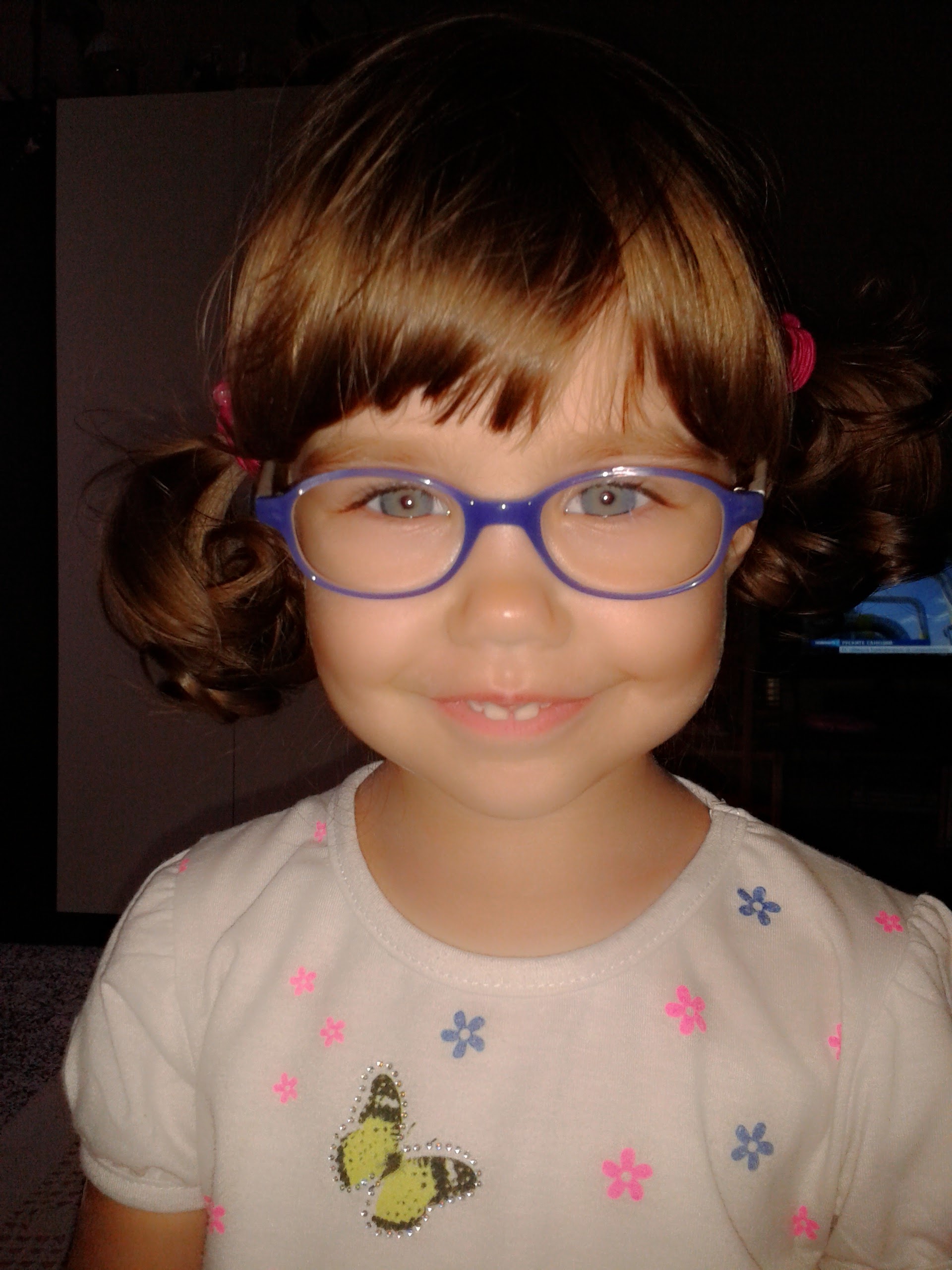
When Zara turned six, chance (did it?) led us to a video on social media.
Prof. Temel from Istanbul talked about telescopic glasses for people with low vision. He worked for many years with children with albinism. I, on the other hand, was a member of ocular albinism groups, as the symptoms of this disease and Zara's were the same. And that's how I came across the video.
We decided to look it up. So Zara celebrated her sixth birthday in Istanbul, at the professor's check-up. He suggested that her condition was a form of cone or rod-cone dystrophy - yes, that's a form of macular degeneration again. Prof. Temmel agreed with everything Prof. Veleva prescribed and felt she could start using his telescopic glasses.
In September of that year, Zara started wearing them - for far vision. It's important to note that what differentiates these glasses from the classic telescope glasses is that it is placed on the inside of the glass and is much harder to see than the others. In addition - it allows the person wearing them to move, walk, even run.
Thanks to them, she is doing perfectly normally at school.
Two years later, news emerged of a gene therapy for Leber's amaurosis. This became the occasion for Assoc. Veleva to arrange genetic analysis for her patients, including Zara.
After eight years of waiting - and despite difficulties with the institutions - we finally got a clear answer. The genetic defect responsible for Zara's condition has been discovered: achromatopsia, with a mutated PDE6C gene. There are 5 genes responsible for achromatopsia, and this is one of the rarest causes of the disease.
Achromatopsia is a rare genetic disorder that results in:
very low visual acuity
strong photophobia
unstable eye movements
difficulty seeing small details
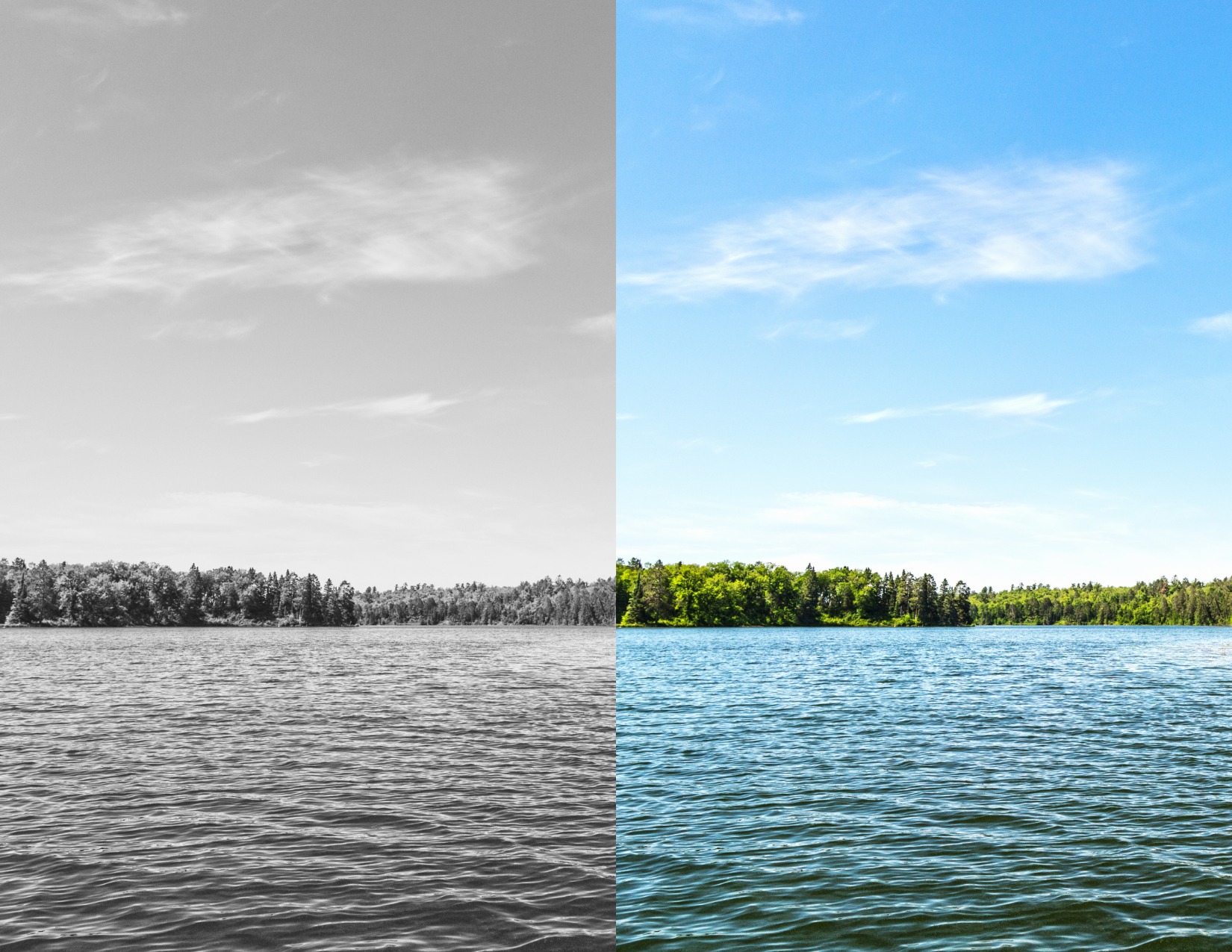
lack of colour vision
In many countries, people with achromatopsia are recognised as "legally blind". Lack of color vision is only a small part of the challenge. The real difficulty is the blurry, light-blinded everyday life.
There is no support system for people with invisible disabilities in Bulgaria. In regular schools there are no adapted textbooks, programmes or methodologies for working with children like Zara.
She attends regular school and at the same time spends two hours a week at the school for visually impaired children in Sofia "Louis Braille". In practice, if we want Zara to work with adapted textbooks and programs, she should attend Louis Braille all day. But at the same time - she has vision and everything else indicates she should be in regular school...
People see a kid with glasses - maybe a little more special - but they don't see the effort behind each step.
Today, for example, an ice cream vendor got angry with Zara because she couldn't make out a bill in the bright sunlight. It wasn't clear to the salesgirl that she couldn't tell it apart, and Zara was to take the criticism.
This is everyday life. This is reality. And it could be different if there was more understanding.
My involvement in groups for achromatopsia and other rare eye diseases has given me something else valuable: connections.
I connected a woman from Bulgaria with Assoc. Veleva and after many years of waiting she also received an official diagnosis. I met the father of a boy with A, spoke to parents from Macedonia, Malta and Australia. In recent years, I have been receiving periodic letters from parents of children with low vision, not only with achromatopsia but also with other macular degenerations.
Everyone needed advice, needed experience, needed hope. And I was happy to share our story and especially to give Zara for example.
I sent them a link to her channel - so they could see how a child with achromatopsia lives, how she dreams, how she grows.
To know that their child is not doomed.
That the disease does not determine destiny - it is only a companion on the road.
Today Zara has many friends. And they all see her first with the heart.
Achromatopsia is rare. Understanding - even rarer.
But every story, every story shared, every smiling child like Zara are steps towards a world where seeing begins not from the eyes but from the heart.
Let us be the ones who smile first. Let us be those who see truly.
We use cookies for an optimal experience. Your consent allows data processing such as browsing behaviour. Opting out may limit some features.
Adding {{itemName}} to cart
Added {{itemName}} to cart